Persistent heel pain can make walking, working and exercising difficult. For healthcare professionals treating plantar fasciitis, supporting patients whose symptoms continue despite conservative care can be a particular challenge.
EMS Swiss DolorClast® Radial Shock Wave Therapy offers a non-invasive treatment option for chronic plantar fasciitis, helping clinicians expand their approach to managing persistent plantar heel pain. Clinical research supports its potential to improve pain and function in appropriately selected patients.
Understanding Plantar Fasciitis
The plantar fascia is a strong band of connective tissue along the bottom of the foot. Plantar fasciitis commonly causes pain near its attachment at the heel, particularly during the first steps in the morning or after resting.
Although “plantar fasciitis” is the familiar term, chronic cases often involve degenerative tissue changes. This is why clinicians may use the term plantar fasciopathy. Understanding the condition’s presentation helps guide assessment and treatment selection.
How EMS Swiss DolorClast® Works
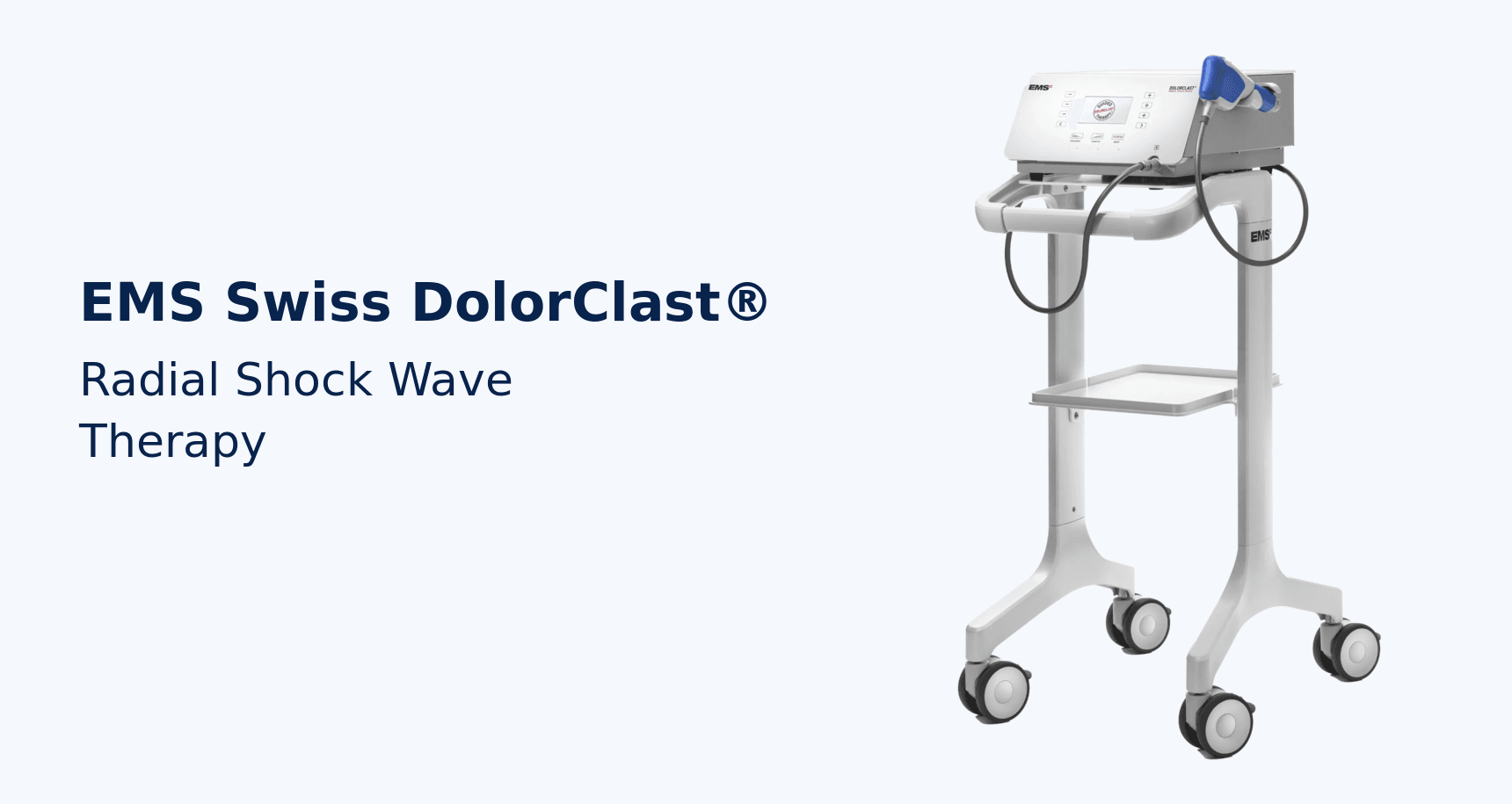
EMS DolorClast® uses a pneumatic ballistic system to deliver radial pressure waves through an applicator placed against the skin. Compressed air drives a projectile inside the handpiece, transferring mechanical energy through the applicator into the underlying tissue.
EMS describes this mechanical stimulation as supporting pain modulation and biological responses involved in tissue repair. The system allows practitioners to adjust treatment delivery according to the condition, treatment area and patient tolerance.
For clinics, this provides a way to introduce targeted mechanical stimulation into a broader rehabilitation program.
Clinical Evidence for Chronic Plantar Fasciitis
A randomized, placebo-controlled multicentre study involving 245 patients investigated radial extracorporeal shock wave therapy for chronic plantar fasciitis.
After three treatments, patients receiving active therapy experienced a 72.1% reduction in a composite pain score at 12 weeks, compared with 44.7% in the placebo group. The overall treatment success rate was 61.0%, compared with 42.2% for placebo. Benefits remained evident at the 12-month follow-up.
These results support radial shock wave therapy as an option for persistent cases, while also showing that outcomes vary and complete symptom resolution is not guaranteed.
Why Consider DolorClast® for Your Clinic?
For physiotherapy, chiropractic, chiropody and sports medicine practices, DolorClast® offers several practical advantages:
- Non-invasive delivery: Treatment is applied externally, without incisions.
- Adjustable treatment settings: Practitioners can tailor delivery to patient tolerance.
- Versatile applications: EMS lists plantar fasciitis alongside other musculoskeletal conditions, including Achilles and patellar tendinopathy.
- Integration with rehabilitation: Shock wave therapy can form part of a structured approach that includes assessment, treatment and follow-up.
What Does Treatment Involve?
Treatment begins with assessment and identification of the painful area. The practitioner applies coupling gel and positions the applicator against the skin to deliver radial pressure waves.
EMS outlines a typical plantar fasciopathy course of three to five sessions, generally spaced one week apart. The actual plan should reflect the patient’s presentation, response and the device’s instructions for use. Treatment can cause discomfort, and temporary effects may include redness, swelling or small areas of skin bleeding.
Expand Your Plantar Fasciitis Treatment Options with Magne-tec
Patients with persistent plantar heel pain need a treatment plan that reflects their symptoms, activity demands and progress. EMS Swiss DolorClast® Radial Shock Wave Therapy gives healthcare professionals another option to consider when conservative measures have not provided sufficient relief.
Contact Magne-tec to learn more about EMS DolorClast® Radial Shock Wave Therapy, discuss equipment options and explore how the technology could fit into your clinic.